


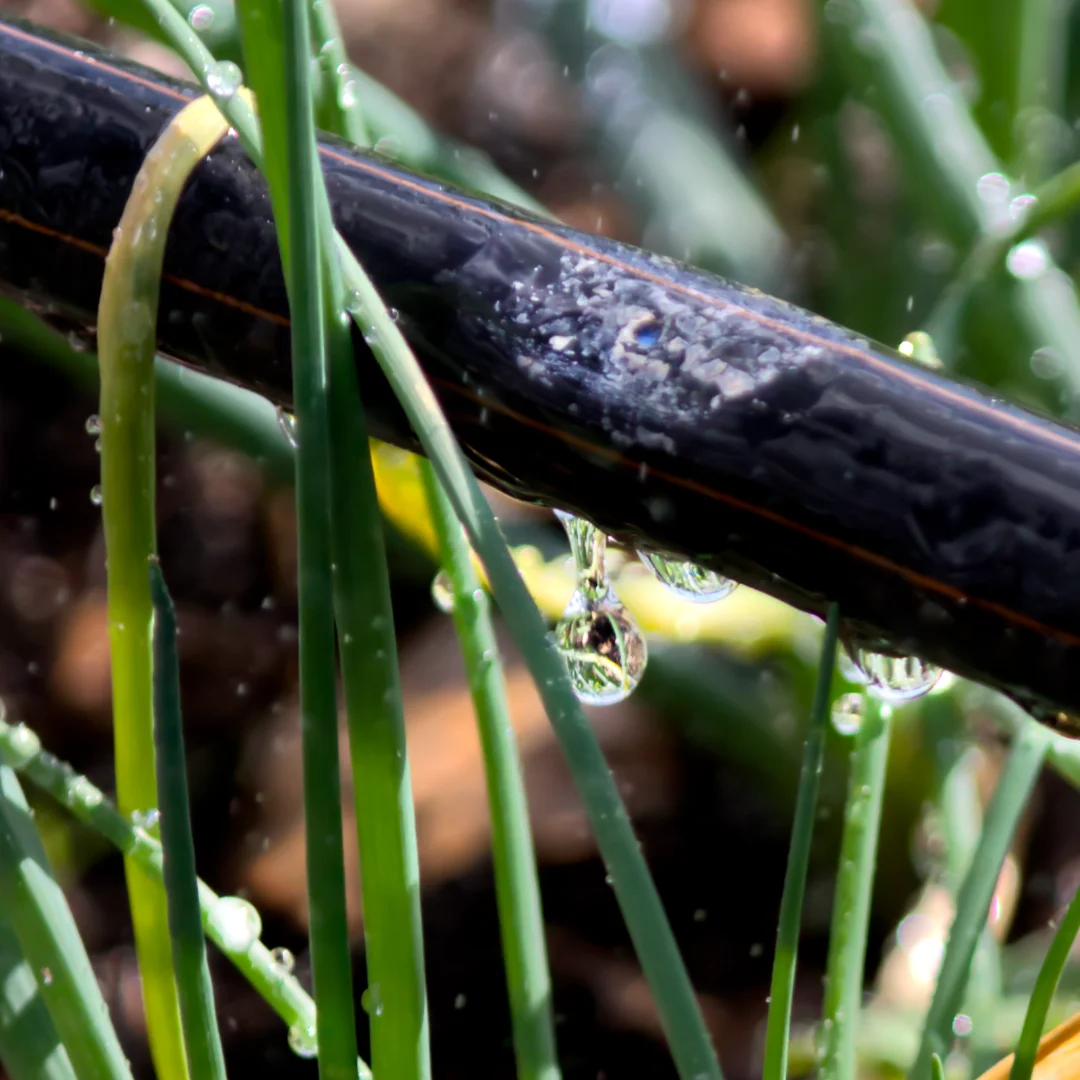
How to Determine If You Have Lime in Your Water
Lime (calcium carbonate) in your water is one of the most common causes of emitter blockages in irrigation systems across South Africa. It’s not harmful to people or plants in small amounts, but in irrigation pipes and driplines, lime can gradually build up and reduce flow performance. Knowing whether your water contains lime helps you choose the right type of dripline for your farm or garden.
What Causes Lime in Water?
Lime forms naturally when groundwater flows through limestone or chalk-rich soils. As it moves, it picks up calcium and magnesium minerals, creating what we call hard water. When this water is pumped or pressurised through your irrigation system, those minerals settle and form scale — particularly inside emitters or narrow pipes.
- Common in boreholes: Groundwater sources often contain dissolved calcium and magnesium.
- Worse in hot areas: Heat accelerates evaporation, leaving mineral residue behind.
- Visible in kettles and taps: If you see white buildup at home, your irrigation system is affected too.
Signs You Might Have Lime in Your Water
- White or chalky residue inside pipes, on fittings, or around drippers.
- Emitters gradually stop dripping evenly or clog completely.
- Reduced pressure at the end of your dripline runs.
- Visible mineral buildup in filters, taps, or tanks.
If you’re unsure, a quick look inside an older fitting or filter screen often reveals the telltale white crusty buildup of lime scale.
Simple Ways to Test for Lime
- DIY vinegar test: Fill a glass with your irrigation water and add a tablespoon of vinegar. If you see fizzing or bubbles, your water likely contains calcium carbonate (lime).
- Observation method: Let a small sample of water evaporate in a clean dish. A white ring or film indicates mineral presence.
- Laboratory water test: For farms or commercial users, local labs can provide a full water hardness report in mg/L (ppm). Anything over 180 ppm is considered hard.
How Lime Affects Dripline Irrigation
Lime particles build up inside emitters and along the inner walls of the dripline, gradually narrowing flow paths. Over time, this can create uneven watering or full blockages in certain zones.
- Reduced uniformity — some plants receive more water than others.
- Increased maintenance and cleaning cycles.
- Shortened dripline lifespan.
That’s why Afriq Water manufactures disposable drip tape — a cost-effective solution for areas with lime-rich water. It allows you to replace the line seasonally instead of fighting mineral buildup in a long-term system.
Preventing Lime Build-up
- Install a proper filtration system at your main water source.
- Flush your irrigation system regularly after use.
- Use acid treatment (citric or phosphoric acid) in professional setups where permitted.
- Opt for disposable drip tape if lime levels are high — it saves time and maintenance costs.
Where to Find Dripline Irrigation in South Africa
Our Afriq Drip range is proudly manufactured in South Africa, offering reliable, value-for-money irrigation solutions for farms of all sizes.
You can find our dripline rolls and fittings at most agricultural Co-Ops and irrigation suppliers across the country. Stock availability may vary, as we manufacture to order, so please allow 2–3 weeks lead time.
Prefer to buy online? Visit:
www.irrigationonlinesa.co.za
Or contact our distributor to find your nearest retailer:
www.iunlimited.co.za/contact/
