


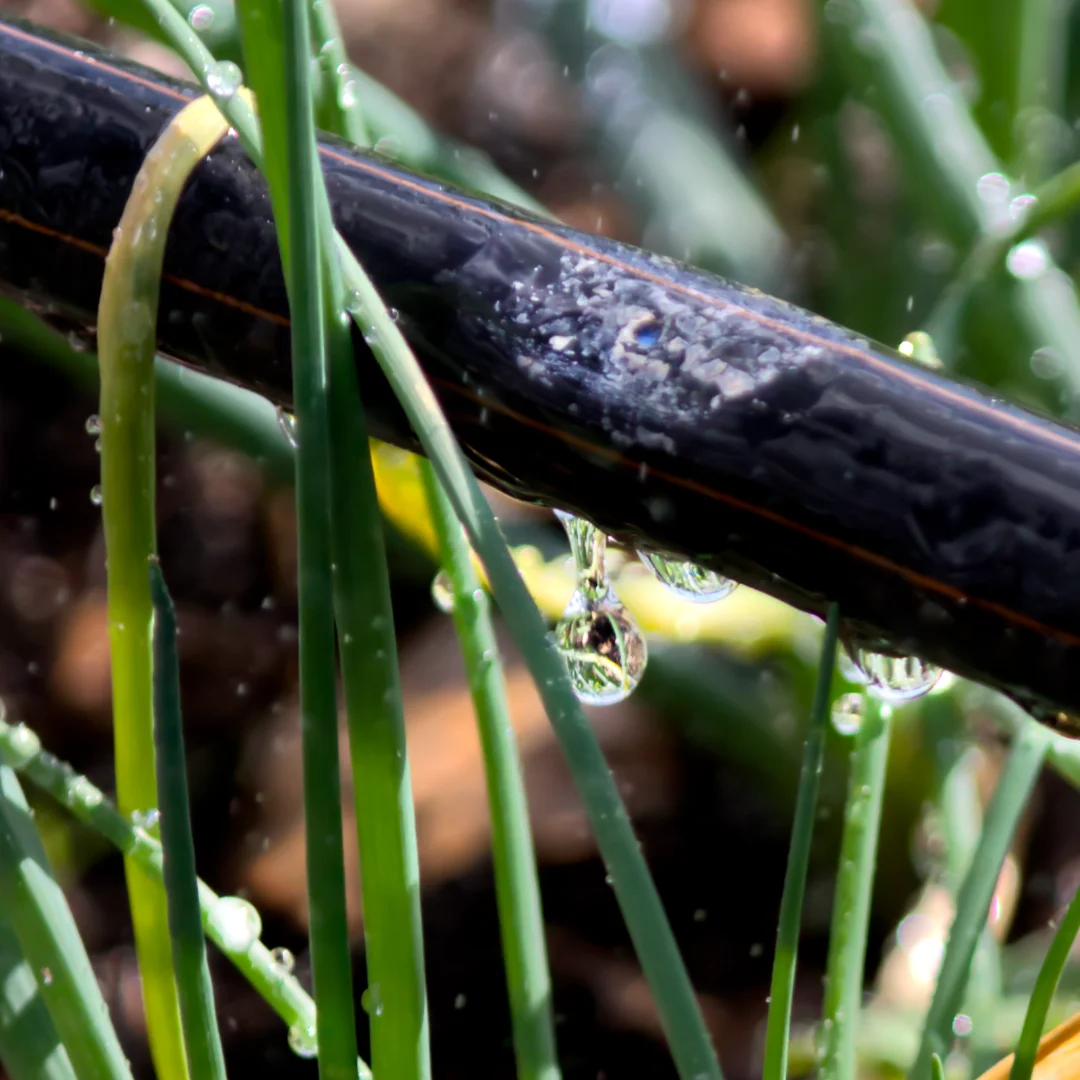
Why Does Lime or Calcium Kill Dripline?
One of the most common causes of dripline failure in South Africa is lime or calcium build-up in the water supply. These minerals are harmless to plants but extremely damaging to irrigation systems — especially in regions using borehole or groundwater sources.
How Lime and Calcium Form
Lime (calcium carbonate) and calcium deposits naturally occur in hard water. When this mineral-rich water flows through your irrigation system, small temperature or pressure changes cause those minerals to settle and crystallise. Over time, they start clinging to the inner walls of your pipes and emitters.
This process is slow but persistent. Once a thin film of lime forms, it traps more particles, speeding up the build-up. Eventually, emitters become partially or completely blocked, causing uneven water flow or total failure.
Why Lime Solidifies and Hardens
What makes lime especially problematic is how it reacts when exposed to air and water repeatedly:
- When wet: Lime remains soft and invisible, circulating through the water.
- When dried: It solidifies into a hard, chalk-like material inside the emitter or pipe wall.
- After repeated cycles: This hard scale becomes permanent, restricting flow and cracking internal components.
How Lime Kills Dripline Systems
Dripline works by pushing small, regulated amounts of water through precision-engineered emitters. When lime accumulates in these narrow channels, it disrupts flow and increases internal pressure. Over time, this leads to:
- Emitter blockages: Reduced or stopped water output in certain zones.
- Uneven irrigation: Some rows stay wet while others dry out.
- Internal cracking: The hardened deposits create micro-fractures when pressure builds up.
- Premature failure: The system becomes unreliable and costly to maintain.
Preventing Lime Damage
Prevention starts with understanding your water source and designing your system accordingly:
- Install filters at your main supply to capture sediment and reduce lime buildup.
- Flush your lines regularly, especially after irrigation cycles.
- In high-lime areas, use Afriq Water’s disposable drip tape designed for short-term seasonal use — ideal for borehole water.
- Only use long-life dripline once your water quality or filtration system can handle mineral content effectively.
Where to Find Dripline Irrigation in South Africa
Our Afriq Drip range is proudly manufactured in South Africa, offering reliable, value-for-money irrigation solutions for farms of all sizes.
You can find our dripline rolls and fittings at most agricultural Co-Ops and irrigation suppliers across the country. Stock availability may vary, as we manufacture to order, so please allow 2–3 weeks lead time.
Prefer to buy online? Visit:
www.irrigationonlinesa.co.za
Or contact our distributor to find your nearest retailer:
www.iunlimited.co.za/contact/
