


How Much Water Does Dripline Save Compared to Traditional Irrigation?
Water is one of the most valuable resources in farming, especially in South Africa’s changing climate. Dripline irrigation has become a preferred choice for growers who want to reduce water usage while maintaining strong yields — but how much water does it actually save compared to traditional irrigation methods?
Traditional Irrigation: Where Water Is Lost
Traditional irrigation systems — like flood, furrow, or even some sprinkler setups — deliver large volumes of water across wide areas. While this can be simple to manage, it’s also highly inefficient.
- Water is often applied faster than the soil can absorb it, leading to runoff.
- High evaporation rates, especially under South Africa’s hot conditions.
- Watering the spaces between plants instead of directly at the roots.
- Loss through uneven distribution or poor system maintenance.
In most open-field cases, traditional systems can waste anywhere between 30% and 50% of applied water before it ever reaches plant roots.
Dripline Irrigation: Targeted Efficiency
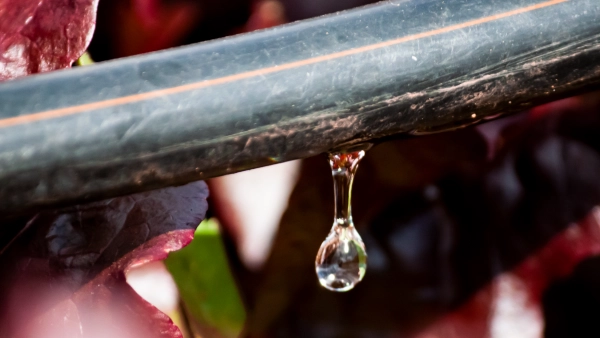
Dripline irrigation delivers water slowly and precisely along each row, directly to the plant’s root zone. Because water is applied at a low rate, the soil absorbs it efficiently — with minimal runoff or evaporation.
1. Direct-to-Root Delivery
Each emitter releases a measured volume of water exactly where it’s needed. Plants receive moisture slowly and evenly, without saturating the soil surface.
2. Reduced Evaporation
Unlike sprinkler systems, dripline doesn’t spray water into the air — meaning almost zero evaporation loss, even on windy or hot days.
3. Uniform Flow Rates
High-quality emitters, like those used in Afriq Drip, maintain consistent flow rates along the entire line, ensuring every plant gets the same amount of water regardless of pressure changes.
How Much Water Can You Actually Save?
While savings depend on your soil type, crop spacing, and management, field studies consistently show that dripline irrigation uses 30–60% less water than flood or furrow systems, and 20–40% less than overhead sprinklers.
- Flood irrigation: up to 50% loss through runoff and evaporation.
- Sprinklers: 20–40% loss through drift and surface evaporation.
- Dripline irrigation: under 10% loss in well-managed systems.
For a farmer using 1 000 000 L of water per hectare through traditional irrigation, switching to dripline could save between 300 000 L and 600 000 L per hectare — every season.
Additional Benefits of Dripline Irrigation
- Reduced weed growth (as water is localised to the crop line).
- Lower fertiliser waste through fertigation efficiency.
- Reduced pumping costs due to lower operating pressure.
- Improved soil health through reduced compaction and erosion.
Conclusion
Dripline irrigation isn’t just about convenience — it’s about measurable efficiency. By delivering water exactly where it’s needed, it helps farmers save 30–60% of water compared to traditional systems, reduce energy use, and achieve consistent results across every row.
At Afriq Water, we manufacture high-quality Afriq Drip lines designed for South African conditions — offering reliability, consistency, and genuine water-saving performance.
Where to Find Dripline Irrigation in South Africa
Our Afriq Drip range is proudly manufactured in South Africa, offering reliable, value-for-money irrigation solutions for farms of all sizes.
You can find our dripline rolls and fittings at most agricultural Co-Ops and irrigation suppliers across the country. Stock availability may vary, as we manufacture to order, so please allow 2–3 weeks lead time.
Prefer to buy online? Visit:
www.irrigationonlinesa.co.za
Or contact our distributor to find your nearest retailer:
www.iunlimited.co.za/contact/
