 Skip to content


What Is Dripline Irrigation, How Is It Made, and How Does It Work?
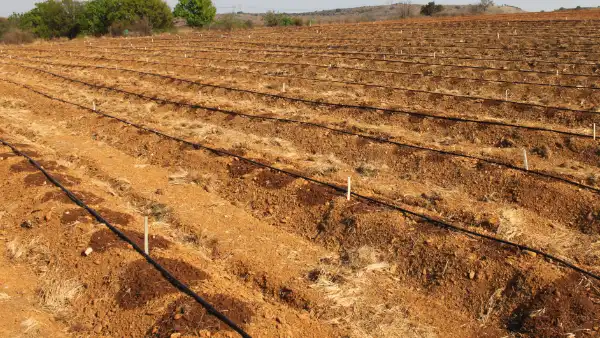
Dripline irrigation is one of the most efficient irrigation systems available for modern farming. It’s a specially designed irrigation pipe with built-in emitters spaced evenly along its length, delivering water directly to plant roots with precision and minimal waste.
What Exactly Is Dripline Irrigation?
In simple terms, dripline irrigation is an irrigation pipe that has emitters—tiny water flow regulators—welded to the inner upper walls of the pipe at specific intervals. These emitters control the water flow, ensuring consistent and even water delivery across your crops.
How Is Dripline Irrigation Made?
Understanding how dripline is made helps you understand how it works. At Afriq Water, we manufacture dripline irrigation in South Africa according to the exact specifications of each Co-Op or client. Here’s a simplified look at the process:
1. Extruding the Pipe
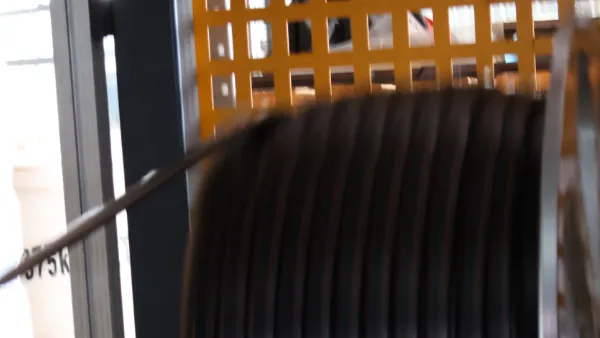
Our machines extrude a plastic tube to form the dripline. The wall thickness (for example, 0.15 mm for drip tape or 1.00 mm for durable heavy-duty dripline) is adjusted according to the client’s requirements.
- Lighter dripline uses standard polymer with a touch of black pigment for algae protection.
- Thicker, long-lasting dripline includes UV pellets and stronger polymer mixes for durability and UV resistance.
2. Embedding the Emitters
While the pipe is still hot, the emitters are inserted and welded securely to the pipe. This ensures a strong bond that won’t leak or detach under pressure.
3. Punching the Water Outlet
Once the emitter is attached, a hole is precisely punched above the emitter’s chamber, where water will later gather and exit in a controlled manner.
4. Coiling and Packaging
Finally, the finished dripline is rolled, packaged, and prepared for delivery. Although this sounds simple, our manufacturing process runs at speeds of up to 200 metres per minute, and every detail must be monitored carefully. Each of these steps involves hundreds of smaller adjustments to maintain quality and consistency.
How Does Dripline Irrigation Work?
Dripline irrigation might seem straightforward—a pipe that delivers water—but the efficiency lies in the emitter design.
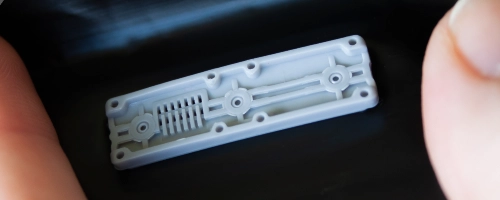
Our emitters, developed by A.A.S. engineers in Cyprus, are highly advanced and designed for optimal water flow control and clog resistance.
Micro-Filter Protection
At the bottom of the emitter, a micro-filter traps small debris that might have passed through your main filtration system.
Note: The micro-filter only protects the emitter—it doesn’t replace your main filter bank.
Flow Regulation
Water enters a winding flow channel with angled “teeth.” These create resistance, slowing the water flow to ensure accurate and consistent output. At 1 BAR pressure, this design delivers precise flow rates per emitter.
Controlled Discharge
Finally, water pools in the emitter’s chamber and exits through the punched outlet in a steady, controlled drip, providing uniform irrigation across the field.
This intricate process ensures your crops receive the right amount of water exactly where they need it—reducing waste and improving yield.
Where to Find Dripline Irrigation in South Africa
Our Afriq Drip range is proudly manufactured in South Africa, offering reliable, value-for-money irrigation solutions for farms of all sizes.
You can find our dripline rolls and fittings at most agricultural Co-Ops and irrigation suppliers across the country. Stock availability may vary, as we manufacture to order, so please allow 2–3 weeks lead time.
Prefer to buy online? Visit:
www.irrigationonlinesa.co.za
Or contact our distributor to find your nearest retailer:
www.iunlimited.co.za/contact/
